


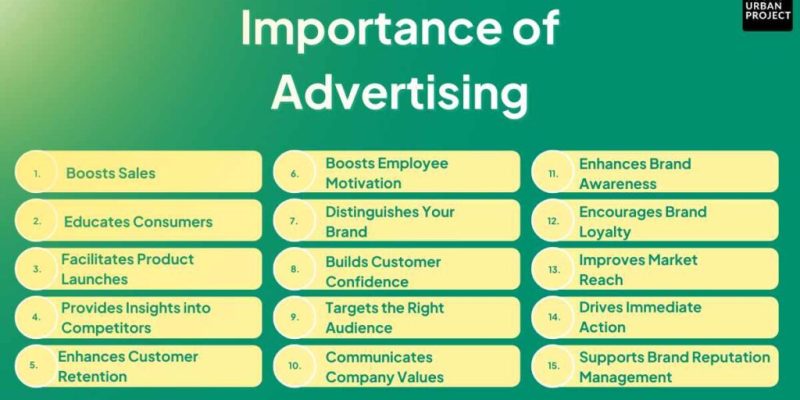
In a competitive marketplace, advertising is not just a marketing tool — it’s a strategic necessity. Whether you’re launching a new startup or managing a well-established company, advertising plays a pivotal role in driving business growth. From increasing brand awareness to boosting sales, advertising offers a multitude of benefits. In this article, we explore the top 7 advantages of advertising for business growth, along with a conclusion and answers to common FAQs.
Enhances Brand Awareness
One of the most fundamental advantages of advertising is its ability to build and reinforce brand awareness. When businesses consistently share their message across various platforms, they position themselves in the minds of consumers.
For example, seeing an ad for a clothing brand on Instagram, YouTube, and a billboard creates multiple touchpoints that strengthen recognition. Over time, customers begin to associate specific colors, slogans, or jingles with the brand. This increased visibility leads to top-of-mind awareness, which is critical when customers are ready to make a purchase decision.
Key Benefits:
- Makes your brand memorable
- Increases familiarity and trust
- Helps differentiate your brand from competitors
Attracts New Customers
Advertising is a powerful way to attract new audiences and convert them into paying customers. Targeted advertising — whether via Google Ads, social media platforms, or programmatic display — allows businesses to reach specific demographics based on age, location, interests, and behavior.
By tailoring messages to the needs and pain points of different segments, businesses can spark interest and drive action. Whether it’s offering a discount or promoting a unique selling point, well-crafted ads can turn first-time viewers into loyal customers.
Key Benefits:
- Expands your customer base
- Increases lead generation
- Supports customer acquisition at scale
Drives Sales and Revenue
At the core of every advertising strategy is the goal of increasing sales and profitability. Advertising creates demand by showcasing the value of your products or services and prompting consumers to take action.
For example, a well-placed Facebook ad promoting a flash sale can lead to an instant spike in online purchases. Similarly, a compelling ad campaign for a new product launch can generate pre-orders and buzz. Advertising shortens the sales cycle and keeps your revenue stream flowing, especially during peak seasons or slow periods.
Key Benefits:
- Boosts short-term and long-term sales
- Promotes upselling and cross-selling
- Provides measurable ROI via conversion tracking
Builds Brand Credibility and Trust
Credibility is the foundation of customer loyalty, and advertising plays a major role in shaping public perception. Consistent and professional ads convey that your business is legitimate, established, and trustworthy.
Investing in advertising, particularly in reputable publications or platforms, lends your brand a certain level of authority. It sends a signal to customers that you’re confident in your offerings and here to stay.
For B2B businesses, credibility-driven advertising such as thought-leadership pieces, testimonials, or case studies can enhance your reputation and generate high-quality leads.
Key Benefits:
- Builds a positive brand image
- Encourages consumer trust and loyalty
- Increases perceived value of products/services
Supports Product and Service Launches
When launching a new product or service, advertising becomes mission-critical. Without promotion, even the most innovative offerings can go unnoticed.
A strategic advertising campaign can generate excitement, educate your audience, and create anticipation prior to launch. It ensures your target market is not only aware of your new offering but understands its benefits and how to access it.
Product launch advertising is especially effective when paired with influencer marketing, press releases, or live demos.
Key Benefits:
- Increases awareness for new products
- Accelerates time-to-market success
- Builds anticipation and early adoption
Strengthens Customer Engagement
Modern advertising isn’t just about broadcasting messages — it’s also about starting conversations. Interactive ad formats, such as polls, quizzes, videos, or carousel ads on social media, invite users to engage rather than passively observe.
This engagement can deepen customer relationships and provide valuable feedback. Moreover, remarketing campaigns allow businesses to re-engage previous website visitors, nurturing them through the sales funnel.
By combining creativity with targeting, advertising can turn your brand into an active participant in customers’ digital lives.
Key Benefits:
- Enhances two-way communication
- Builds community and brand advocacy
- Increases time spent with brand assets
Provides Measurable Results and Insights
One of the greatest strengths of digital advertising is its measurability. Unlike traditional methods, online ads provide detailed metrics on reach, clicks, conversions, and customer behavior.
Businesses can track what works and what doesn’t in real time, enabling continuous optimization. For example, A/B testing different ad creatives can highlight which message resonates more with your audience.
Additionally, tools like Google Analytics, Meta Ads Manager, and HubSpot offer in-depth dashboards to guide future strategy.
Key Benefits:
- Allows data-driven decision making
- Helps optimize budget allocation
- Supports continuous improvement of campaigns
Conclusion
The top 7 advantages of advertising for business growth make it clear: advertising is much more than a cost — it’s a strategic investment. By increasing brand visibility, attracting new customers, and driving measurable results, advertising fuels long-term success and scalability.
Whether you’re using paid search, social media, TV, or print, the right mix of platforms and messages can amplify your brand’s reach and impact. As competition intensifies, consistent, creative, and data-backed advertising becomes essential for thriving in today’s marketplace.
FAQs
1. What is the most cost-effective form of advertising for small businesses?
Digital advertising, such as social media ads or Google Ads, is often the most cost-effective. These platforms allow for precise targeting, flexible budgets, and measurable performance, making them ideal for small businesses.
2. How often should a business run advertising campaigns?
The frequency depends on goals, budget, and industry. However, consistency is key. Most businesses benefit from running ongoing campaigns with seasonal or product-specific boosts.
3. What makes an advertisement successful?
A successful ad is one that resonates with the target audience, clearly communicates a value proposition, and includes a strong call-to-action (CTA). High-quality visuals, engaging copy, and strategic placement are also essential.
4. Can advertising help a business recover from a sales slump?
Absolutely. A well-executed advertising campaign can rekindle customer interest, introduce new offers, and reposition the brand to drive renewed engagement and sales.
5. Is traditional advertising still effective?
Yes, traditional advertising such as radio, TV, and print can still be effective, especially for local markets or older demographics. The best strategy often includes an integrated approach combining both traditional and digital channels.
Also read: Auburn and Red Hair: 10 Stunning Transformations That Will Leave You Speechless