


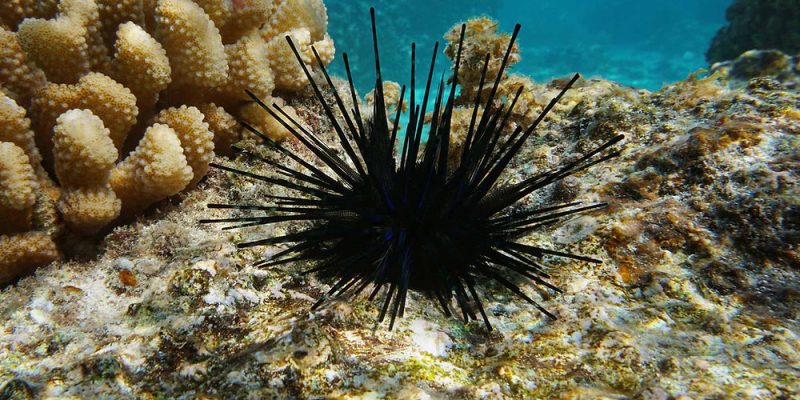
In the crystal-clear waters surrounding Hawaii, one of the most intriguing and iconic marine creatures is the Wana sea urchin. Recognized by its long, sharp spines and deep purple hue, this sea urchin has long been both feared and admired — feared for its painful sting, yet admired for its delicate and flavorful roe, prized in local cuisine.
The Wana, a Hawaiian term for the long-spined sea urchin (Diadema species), plays an important role in the ecosystem, the culture, and the culinary heritage of the islands. Whether you’re a diver, a foodie, or simply fascinated by ocean life, learning about the Wana sea urchin gives you a deeper appreciation of Hawaii’s vibrant marine world.
What Is the Wana Sea Urchin?
The Wana sea urchin refers primarily to Diadema paucispinum or Diadema setosum, species of long-spined urchins found across the Indo-Pacific, including Hawaii. “Wana” in Hawaiian means “thorn” or “spine,” a fitting name for an animal that’s essentially a living sphere of needles.
They are commonly found in shallow reef zones, hiding in crevices or beneath rocks during the day and coming out at night to feed on algae. Though beautiful to look at, their spines are extremely sharp and venomous, capable of breaking off under the skin — making the Wana both dangerous and fascinating.
Appearance: How to Identify a Wana
Wana sea urchins are easy to spot once you know what to look for.
- Color: Typically deep black, purple, or brown with a glossy sheen under sunlight.
- Spines: Extremely long (up to 10 inches), thin, and flexible. They radiate outward like dark needles.
- Body: A small, round test (shell) hidden beneath the spines, usually about 3–4 inches in diameter.
- Movement: Though seemingly static, the Wana moves slowly using hundreds of tiny tube feet underneath its body.
These features distinguish it from other Hawaiian urchins, such as the Hā‘uke‘uke (rock-boring urchin) or the Hā‘ukea (short-spined urchin).
Habitat and Distribution
Wana urchins thrive in warm, tropical waters throughout the Pacific and Indian Oceans. In Hawaii, they are most often found:
- In shallow coral reefs, especially on rocky or volcanic substrates.
- At depths of 1 to 10 meters, where light and algae are abundant.
- Along the leeward coasts of islands, where waters are calm and clear.
Their presence is a good indicator of healthy reef ecosystems, as they help keep algae populations in check, allowing coral to thrive. However, overpopulation can damage coral reefs by overgrazing algae cover, illustrating their delicate ecological balance.
The Wana’s Role in Hawaiian Culture
For centuries, native Hawaiians have had a deep connection with the sea and its creatures — and the Wana is no exception. Traditionally, Hawaiians viewed the ocean as a living resource that required both respect and understanding.
- Culinary use: The uni-like roe, or kae, was considered a delicacy, eaten fresh or mixed with sea salt.
- Fishing wisdom: Fishermen learned to recognize Wana habitats as signs of healthy reefs where fish also congregate.
- Cautionary teaching: Parents taught children to “watch where you step” — a reminder that beauty in nature can also require caution.
Even today, many local divers harvest Wana with respect, following sustainable practices to maintain the species and reef health.
Culinary Delight: The Taste of Wana
In Hawaii, Wana is a delicacy similar to Japanese uni (sea urchin roe). Its flavor is unique — creamy, briny, and slightly sweet, often described as “the essence of the ocean.”
When freshly harvested, the roe has a buttery texture and bright golden-orange color. It’s typically enjoyed:
- Raw, served directly from the shell with a squeeze of lemon or a sprinkle of sea salt.
- In sushi or poke, for an elegant, umami-packed experience.
- With rice or bread, to balance its rich marine flavor.
Because Wana is seasonal and difficult to collect safely, it’s considered a luxury seafood item. Locals prize it for its freshness and for the thrill of obtaining it — often by hand from the reef.
Safety First: Handling and Avoiding Wana Stings
Despite its culinary value, the Wana is best approached with extreme caution. Its long spines are brittle and venomous, capable of penetrating the skin easily.
If You’re in the Water:
- Avoid touching or stepping on rocks where you see long, black spines sticking out.
- Wear reef-safe water shoes or fins when snorkeling in shallow areas.
- Maintain buoyancy control when diving to avoid brushing against reef crevices.
If You Get Stung:
- Do not squeeze or pull the spines out with force — they are brittle and can break.
- Soak the area in warm (not scalding) water to help dissolve the calcium carbonate spines and relieve pain.
- Use tweezers only for larger, visible fragments.
- Seek medical attention if spines remain embedded or symptoms worsen.
While the venom is not typically deadly, it can cause intense pain, swelling, and infection if not treated properly.
Ecological Importance of Wana Sea Urchins
The Wana plays a crucial ecological role in maintaining reef balance. As herbivores, they graze on algae that would otherwise smother coral reefs. However, balance is key:
- Too few Wana: Algae overgrowth harms coral health.
- Too many Wana: Overgrazing leaves reefs barren and fragile.
Natural predators — such as triggerfish, wrasses, and lobsters — help control urchin populations. In some regions, scientists have reintroduced urchins to restore coral reefs suffering from algae blooms, proving that these spiny creatures are vital to marine health.
Sustainability and Conservation
Overharvesting, pollution, and climate change threaten the delicate marine ecosystems where Wana thrives. Sustainable management includes:
- Responsible harvesting: Taking only what’s needed and allowing populations to regenerate.
- Marine protected areas (MPAs): Restricting collection in sensitive zones.
- Community education: Encouraging locals and tourists to respect reef ecosystems.
Organizations in Hawaii and across the Pacific are now studying urchin populations to support reef restoration and biodiversity protection. Some aquaculture efforts even cultivate sea urchins in controlled environments for culinary use, reducing wild collection pressure.
How Wana Compares to Other Sea Urchins
While all sea urchins share similar biological traits, Wana stands out for its long spines and potent sting. Here’s how it compares to other types:
| Feature | Wana (Long-Spined) | Hā‘uke‘uke (Rock-Boring) | Uni (Japanese Sea Urchin) |
| Spines | Long, thin, venomous | Short, blunt, non-venomous | Short, thick |
| Edibility | Edible roe, strong flavor | Edible but less common | Highly prized delicacy |
| Habitat | Shallow reefs | Rocky intertidal zones | Cold northern waters |
| Risk | Painful sting | Minimal | None |
This comparison highlights Wana’s dual identity — beautiful yet dangerous, delicious yet demanding respect.
Conclusion
The Wana sea urchin represents the perfect balance of nature’s elegance and caution. Revered in Hawaiian culture, valued by chefs, and vital to reef ecosystems, it reminds us that the ocean’s treasures come with responsibility.
Whether you admire it from afar while diving or savor its rich roe at a seaside meal, the key is understanding its role and treating it with respect. The Wana isn’t just a sea creature — it’s a symbol of Hawaii’s deep connection to the ocean, where beauty, danger, and sustenance coexist in harmony.
So next time you explore the reefs or enjoy a dish of uni-like Wana, remember the ancient wisdom of the islands: “He ali‘i ka ‘āina, he kauwā ke kanaka” — the land (and sea) is the chief; man is its servant.
FAQs
1. What does the word “Wana” mean in Hawaiian?
“Wana” means spine or thorn, referring to the long, sharp spines of the sea urchin. It’s both a warning and a description of its defining feature.
2. Can you eat Wana sea urchin?
Yes! The edible part is the roe (eggs) inside the shell. It’s considered a delicacy, similar to Japanese uni, with a creamy, oceanic flavor.
3. Is the Wana sea urchin dangerous?
Yes, its spines are venomous and brittle, capable of puncturing the skin and causing pain or infection. Always handle with caution or admire from a safe distance.
4. Where can you find Wana sea urchins?
They inhabit shallow coral reefs and rocky shorelines throughout Hawaii and the broader Indo-Pacific, especially in calm, sunlit waters.
5. How do locals harvest Wana safely?
Experienced divers use tools or long tongs to avoid direct contact with the spines. Harvesting is typically done in calm seas and shallow waters, always with respect for the reef.
Also read: How Long Does a Lash Lift and Tint Take? Full Guide & Timing Explained