



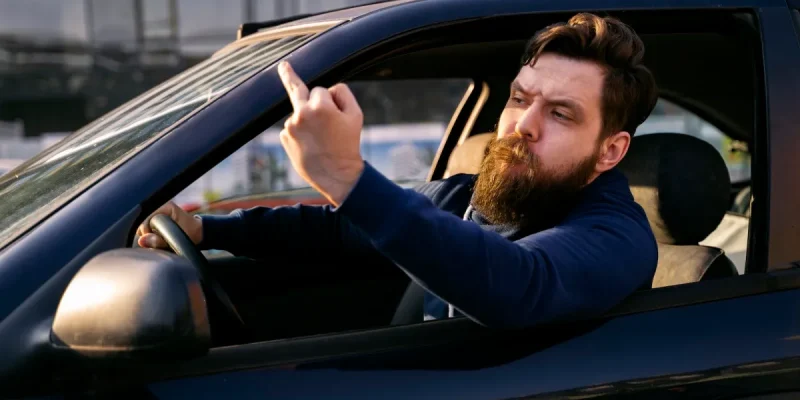
Most people have experienced frustration during a traffic stop or while dealing with law enforcement. In heated moments, some may feel the urge to express anger through offensive gestures—like “flipping off” a police officer. But the big question is: Is it illegal to flip off a police officer?
The answer is more complex than a simple yes or no. While the First Amendment protects freedom of speech and expression, there are circumstances where insulting gestures toward law enforcement may still result in legal consequences.
This article explores the legal boundaries, relevant court cases, and potential risks of flipping off a police officer in the United States.
What Does It Mean to “Flip Off” a Police Officer?
The act of “flipping off”—raising the middle finger—is widely recognized as an obscene or insulting gesture. In most contexts, it’s considered offensive but protected speech. When directed at law enforcement, however, the situation becomes complicated because of the power dynamic and potential legal implications.
First Amendment Protections
Free Speech and Offensive Gestures
The First Amendment of the U.S. Constitution protects the right to free speech, which includes nonverbal expressions like hand gestures. Courts have consistently ruled that even offensive, rude, or vulgar speech is generally protected under the Constitution.
Supreme Court Precedent
The U.S. Supreme Court has affirmed that freedom of expression includes the right to criticize government officials—even if that criticism is disrespectful or insulting.
This means that, in general, flipping off a police officer is not illegal in itself.
Key Court Rulings on Flipping Off Police
Several court cases have addressed this issue directly:
- Cruise-Gulyas v. Minard (2019) – A Michigan woman flipped off a police officer during a traffic stop. The officer pulled her over again and issued a harsher ticket. The U.S. Court of Appeals ruled that the officer violated her First Amendment rights, confirming that the gesture was protected speech.
- Duran v. City of Douglas, Arizona (1990) – A man made obscene gestures and yelled insults at police. The court ruled his actions were protected, and officers had no legal grounds to stop or arrest him.
These cases highlight that offensive gestures toward police are generally legal, even if they are disrespectful.
When Flipping Off a Police Officer Can Become Illegal
While the gesture itself is protected, the context matters. Certain actions that accompany the gesture may cross into illegal territory.
Disorderly Conduct
If the gesture is part of a larger scene—such as yelling aggressively in public, blocking traffic, or inciting others—it could be charged as disorderly conduct.
Obstruction of Justice
If the gesture is combined with behavior that interferes with an officer’s duties (like refusing lawful commands), it may lead to charges.
Threatening Behavior
While the gesture itself is not a direct threat, if it is paired with words or actions that suggest violence, it may be considered harassment or a threat.
Escalation Risk
Even if legal, flipping off an officer can escalate the encounter. Police may legally stop or detain you for other reasons (e.g., traffic violations), and the gesture could worsen the situation.
State Differences in Enforcement
The First Amendment applies nationwide, but enforcement can vary:
- Some states have broad disorderly conduct laws that officers may use in response.
- Local culture and police department policies can influence how strictly these laws are applied.
- Ultimately, federal courts often strike down such charges, but that doesn’t prevent an initial arrest or ticket.
Potential Consequences of Flipping Off an Officer
Even if the action is legal, there are possible consequences:
- Temporary Detention – Officers may stop you, even if charges don’t stick.
- Unnecessary Tickets – As in the Cruise-Gulyas case, officers may try to retaliate with citations.
- Court Costs – Fighting charges in court can be time-consuming and expensive.
- Escalation of Conflict – The gesture may provoke hostility, leading to unnecessary complications.
Alternatives to Flipping Off Police
Instead of making obscene gestures, consider safer ways to express frustration or protect your rights:
- Stay Calm – Anger escalates situations quickly.
- Exercise Your Rights – Politely refuse searches or questioning if appropriate.
- File a Complaint – If you feel mistreated, use legal channels to report misconduct.
- Seek Legal Help – Attorneys and civil rights groups can support claims of harassment.
Public Perception vs. Legal Reality
Even though flipping off an officer is often legal, it is not socially wise. Most people view the gesture as confrontational and disrespectful. For officers, it can feel like a personal attack, even if the law protects it.
Thus, the legal right to flip off a police officer does not mean it is a good idea.
International Perspective
In some countries, insulting gestures toward police are not protected speech and can lead to fines or jail time. For example:
- Germany – Insulting an officer can result in fines.
- Canada – Similar protections to the U.S., but still subject to interpretation.
- UK – Offensive gestures may fall under public order offenses.
This highlights that protections in the U.S. are stronger than in many parts of the world.
Conclusion
So, is it illegal to flip off a police officer?
In the United States, the act of flipping off an officer is protected under the First Amendment as free speech. Courts have consistently ruled that it is not, by itself, a criminal offense.
However:
- The gesture can still escalate encounters.
- Officers may issue citations or make arrests under related laws, even if they don’t hold up in court.
- It may be legal, but it’s rarely wise.
The best approach? Know your rights, stay calm, and address grievances through legal channels rather than confrontation.
FAQs
1. Is flipping off a police officer considered free speech?
Yes. Courts have ruled that it is protected under the First Amendment as expressive conduct.
2. Can I be arrested for flipping off an officer?
Technically, you shouldn’t be. However, officers may still try to arrest you under related charges like disorderly conduct, which may later be dismissed.
3. Has anyone won a lawsuit for being punished after flipping off an officer?
Yes. Cases like Cruise-Gulyas v. Minard have resulted in courts siding with citizens.
4. Is it illegal to curse at a police officer?
Generally no, unless it crosses into threats or incitement. Offensive language is still protected speech.
5. Should I flip off a police officer to make a point?
No. While legal, it’s risky, disrespectful, and likely to escalate the situation unnecessarily.
Also read: Prime Dent: 10 Powerful Reasons Patients Trust Their Smiles Here