



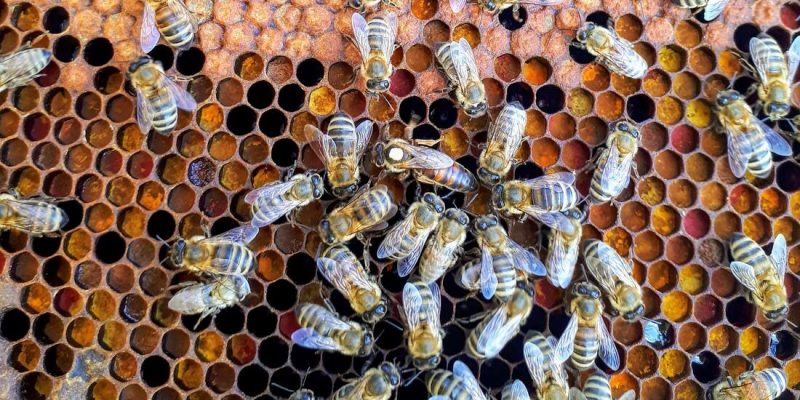
Bees are among the most fascinating creatures in the natural world. Known primarily for pollination and honey-making, they are also admired for their distinct colors and patterns. From the classic black-and-yellow stripes of honeybees to the metallic green sheen of sweat bees, bee colors carry both biological importance and symbolic meaning.
This guide explores the colors of bees, their purpose in survival, how bees see the world, and what their colors symbolize in different cultures.
The Classic Black and Yellow of Bees
When most people think of bees, they picture the honeybee or bumblebee with its bold black and yellow stripes.
Why Black and Yellow?
- Warning Signals (Aposematism): The bright contrast warns predators that bees can sting.
- Camouflage in Flowers: The stripes also help them blend into blossoms when collecting nectar.
- Thermal Regulation: Dark colors like black help absorb heat, which is crucial for flying in cooler temperatures.
The black-and-yellow pattern is so iconic that it has become a universal symbol for bees across art, branding, and culture.
Beyond Black and Yellow: Other Bee Colors
While the honeybee dominates the spotlight, there are over 20,000 species of bees worldwide, many showcasing unique colors:
- Metallic Green Bees (Sweat Bees): Iridescent green and blue hues.
- Red and Orange Bees: Some solitary bees feature rusty red tones.
- Brown and Tan Bees: Carpenter bees and digger bees have earthy tones.
- All-Black Bees: Some species lack stripes and appear fully black.
- Blue Bees: Rare species like the Blue Orchard Mason Bee display striking shades of blue.
Each color variation plays a role in mating, camouflage, or predator deterrence.
How Bees See Colors
Interestingly, bees don’t see the world the way humans do.
- Visible Spectrum for Bees: Bees can see ultraviolet (UV), blue, and green.
- No Red Perception: They cannot see red, which appears black to them.
- Flower Patterns: Many flowers have UV patterns (invisible to humans) that guide bees to nectar.
This unique vision means bee colors are not just for humans to admire — they also help bees navigate their world.
The Biological Role of Bee Colors
Protection Against Predators
Bright patterns act as warning signals to birds, lizards, and mammals.
Mating and Attraction
Certain bees use color as part of their mating rituals. Metallic species reflect light to attract mates.
Camouflage and Blending
Brown or black bees blend into tree bark and soil to avoid predators.
Social Signaling
In some bee species, color helps distinguish roles within colonies or identify other members.
Symbolism of Bee Colors in Culture
Colors carry symbolic meaning across societies, and bees are no exception.
Yellow and Black
- Represents balance between warning and beauty.
- Symbolizes hard work, energy, and community.
Green Bees
- Associated with renewal, fertility, and abundance.
- In folklore, green bees symbolize luck and prosperity.
Blue Bees
- Rare and mystical, often linked to spiritual insight and peace.
Red or Orange Bees
- Represent courage, strength, and passion.
Black Bees
- Symbolize mystery, protection, and resilience.
Bee Colors and Human Fashion & Design
The black-and-yellow combination is widely used in fashion, logos, and safety signs. Brands leverage these colors because:
- They are instantly recognizable.
- They symbolize energy and productivity.
- They naturally draw attention (as they do in nature).
Luxury designers have even incorporated bee motifs and colors into jewelry, clothing, and accessories, reinforcing the bee as a symbol of power and harmony.
Differences Between Bee Colors and Wasp Colors
Many people confuse bees and wasps because both share the black and yellow warning pattern.
- Bees: Generally fuzzier, with muted yellow and darker black tones.
- Wasps: More slender, shiny, with bright yellow and sharper stripes.
- Behavioral Difference: Bees are pollinators and less aggressive; wasps are predators and more defensive.
This color mimicry is part of a survival strategy — predators often avoid both due to the risk of stings.
Regional Variations in Bee Colors
Different climates and environments influence bee coloration:
- Tropical Bees: More vibrant colors like metallic green or blue.
- Desert Bees: Subtle tones of brown and tan for camouflage.
- Temperate Bees: Classic black and yellow to absorb heat efficiently.
The Role of Bee Colors in Conservation
Understanding bee colors helps conservationists identify species and monitor populations.
- Color Identification: Helps track pollinator diversity.
- Educational Awareness: Brightly colored bees attract attention to conservation campaigns.
- Citizen Science: Amateur observers can report unusual bee colors to scientists.
Conclusion
Bee colors are more than just beautiful patterns — they are vital survival tools, communication signals, and cultural symbols. From the iconic black-and-yellow stripes of honeybees to the shimmering greens and blues of rare species, bee colors play a key role in the balance of nature.
Understanding these colors not only deepens our appreciation of bees but also reminds us of their importance in pollination, biodiversity, and human culture.
Whether admired in a garden, studied by scientists, or symbolized in fashion, bee colors remain a striking reminder of nature’s brilliance.
FAQs
1. Why are bees black and yellow?
The colors act as a warning to predators while also helping bees regulate temperature.
2. Are there green or blue bees?
Yes. Metallic sweat bees and Blue Orchard Mason Bees display green and blue hues.
3. Can bees see the color red?
No. Bees cannot see red; it appears black to them.
4. Do bee colors differ by species?
Yes. Different species have unique color patterns for protection, camouflage, and mating.
5. What do bee colors symbolize in culture?
They represent hard work, fertility, balance, and resilience, depending on the color.
Also read: How Long Do Routers Last? A Complete Guide to Lifespan, Maintenance, and Replacement