


Building a balsa wood tower is a classic school project that blends creativity, science, and engineering. It is often part of physics or STEM competitions where students must design a lightweight but strong structure capable of holding a heavy load. The challenge teaches balance, strength, geometry, and problem-solving — all while being fun and hands-on.
In this article, you will discover practical ideas and design tips for creating your own balsa wood tower. Whether you are a beginner or preparing for a science fair, these strategies will help you design a strong, stable, and impressive model.
Understanding the Purpose of a Balsa Wood Tower Project
Before you begin, it is important to understand why this project is assigned. Teachers use balsa wood tower projects to help students apply physics and engineering principles in real life.
You learn about force distribution, tension, compression, and load-bearing capacity. The goal is to build a structure that is light but can hold as much weight as possible without collapsing. By testing different designs, you will understand how structure and geometry influence strength.
Choosing the Right Type of Balsa Wood
Balsa wood is ideal for model building because it is strong yet lightweight. However, not all balsa wood pieces are the same. Density varies between sheets, so choosing the right type is essential.
Select wood that is straight, has a fine grain, and is neither too soft nor too brittle. For load-bearing sections such as the main supports, use slightly denser pieces. For diagonal or cross braces, lighter pieces can be used to save weight. You can find balsa wood sheets or sticks at most craft or hobby stores.
Gathering the Right Tools and Materials
To build your tower effectively, gather the right materials before you start. You will typically need:
- Balsa wood sticks or strips
- A sharp craft knife or small saw
- Ruler or measuring tape
- Pencil for marking
- Wood glue or super glue
- Sandpaper for smoothing edges
- Cutting mat or flat work surface
Safety should always come first. Work carefully when cutting, and always measure twice before making a cut to avoid waste.
Understanding Basic Tower Design Principles
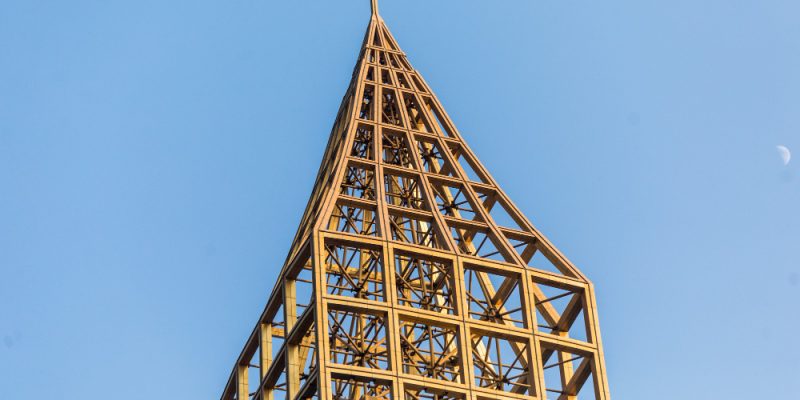
Successful tower designs rely on geometry. The strongest shapes in construction are triangles and pyramids because they distribute weight evenly. This is why you often see triangle-based supports in bridges, cranes, and towers.
Your balsa wood tower should have a wide base for stability and taper toward the top. This helps balance the structure and prevents tipping. Adding diagonal braces strengthens the frame and reduces movement under load. The more evenly you distribute the stress, the stronger your tower will be.
Popular Balsa Wood Tower Design Ideas
There are several classic design styles you can try, each with its own strengths and challenges:
a. The Pyramid Tower:
A simple yet strong design that starts wide at the base and narrows to a single point at the top. It offers excellent stability and is easy to build for beginners.
b. The A-Frame Tower:
This design resembles a tall letter “A.” It is efficient in distributing vertical loads and can be modified with cross braces for added support.
c. The Truss Tower:
This style uses triangular sections throughout its frame, similar to bridges. It is very strong and lightweight, making it ideal for competitions.
d. The Square or Rectangular Tower:
This design focuses on using vertical beams connected by cross braces. It can hold a lot of weight if reinforced properly, but it needs careful balancing.
Experiment with different shapes to see which design gives the best combination of strength and weight.
Planning Your Tower Before Building
Planning is one of the most important steps in building a strong balsa wood tower. Start by sketching your design on paper. Include measurements, base width, tower height, and placement of each brace.
Next, make a small-scale model using toothpicks or thin wire to visualize your design. This helps you identify weak points before building the real tower. Once you are satisfied, transfer your measurements to your balsa wood pieces.
Take your time cutting and measuring. Precision is key to making the tower symmetrical and stable.
Building the Tower Step by Step
Now that you have a plan, it is time to build. Here’s a simple process to follow:
Step 1: Start by building the base. Ensure all angles are square and even. This foundation will determine how stable your tower is.
Step 2: Construct the vertical sides. Use glue sparingly but firmly to connect the joints. Allow each section to dry before adding more pieces.
Step 3: Add cross braces between the vertical supports. Alternate the direction of the braces to strengthen the structure from multiple angles.
Step 4: Connect the sides together. Assemble the four sides of the tower and reinforce the corners.
Step 5: Once the structure is complete, inspect all joints and apply extra glue where needed. Let the tower dry completely before testing.
Patience during construction is important. Rushing can cause weak joints and uneven sections, reducing the tower’s ability to carry weight.
Testing and Improving Tower Strength
Testing is an exciting part of the project because it shows how your design performs under pressure. Gently add weight to the top of the tower and observe where it begins to bend or fail.
If your tower collapses too early, do not be discouraged. This is part of the learning process. Analyze where it broke — was it the base, the middle section, or a joint? Reinforce those areas in your next design.
You can also experiment with different glue types, wood thicknesses, or brace patterns to improve strength without adding too much weight. Keeping track of your results helps you build stronger towers over time.
Creative Enhancements and Finishing Touches
Beyond strength, appearance also matters, especially in school exhibitions or science fairs. You can paint or decorate your tower after testing, but do this only once the glue has fully dried.
Consider labeling each part of your structure to show your understanding of engineering concepts such as tension and compression. Adding a small flag or school emblem on top can make your project stand out visually.
Remember, the main focus is function, but creativity and presentation can earn extra credit from teachers and judges.
Common Mistakes to Avoid
Even with careful planning, beginners sometimes make small errors that weaken their towers. Here are a few to avoid:
- Using too much glue, which adds unnecessary weight.
- Cutting pieces unevenly, leading to instability.
- Skipping diagonal braces, which are crucial for strength.
- Building without a flat surface, causing leaning or imbalance.
- Testing before the glue is fully dry, resulting in weak joints.
Learning from these mistakes is part of the process and helps improve your building skills for future projects.
Conclusion
Building a balsa wood tower for a school project is more than just an assignment — it is an opportunity to explore engineering, creativity, and problem-solving. With the right design, materials, and attention to detail, you can create a tower that is both strong and elegant.
Remember that failure is part of the experiment. Each attempt teaches valuable lessons about balance, geometry, and strength. Whether your tower holds a few pounds or many, what matters most is the process of learning, testing, and improving.
So, take your time, experiment with designs, and enjoy the journey of building something with your own hands. When your balsa wood tower stands tall and strong, you will not only have completed a project but also gained real-world engineering experience.
FAQs
1. What is the best shape for a balsa wood tower?
Triangular shapes are the strongest because they distribute force evenly. Designs like truss or pyramid towers are excellent for strength and stability.
2. How tall should my balsa wood tower be for a school project?
It depends on the project requirements, but most towers are between 12 and 24 inches tall. Always check your teacher’s or competition’s specific height and weight limits.
3. What kind of glue works best for balsa wood?
Wood glue or cyanoacrylate (super glue) works best. Use small amounts to avoid adding unnecessary weight and allow enough time for drying.
4. How can I make my balsa wood tower hold more weight?
Use diagonal cross braces, a wide base, and balanced weight distribution. Ensure all joints are secure, and choose denser balsa wood for key supports.
5. Why does my balsa wood tower collapse easily?
Common causes include weak joints, uneven cuts, poor glue bonding, or missing braces. Review your design and reinforce the weakest sections before rebuilding.
Also read: Wooden Office Chairs – Classic Comfort and Timeless Design