


From the snow-covered tundra to icy cliffs and vast open skies, Arctic Birds have evolved to thrive in some of the harshest environments on Earth. These unique creatures not only survive in the coldest places but also display extraordinary behaviors, colors, and flight patterns. Whether you’re a birdwatcher, nature lover, or simply curious, this guide showcases 10 incredible Arctic birds you’ll absolutely adore. Let’s dive into the world of these cold-weather flyers that bring beauty and resilience to the polar regions.
Snowy Owl – The Silent Hunter of the Arctic
The Snowy Owl is one of the most iconic Arctic Birds, instantly recognizable by its bright white plumage and piercing yellow eyes. Native to the tundra, it’s a master of stealth and silence while hunting. It primarily feeds on lemmings and other small mammals, using its keen vision to spot prey from afar. These majestic owls are also among the few Arctic birds that remain in the north year-round.
Arctic Tern – The Long-Distance Traveler
The Arctic Tern holds the record for the longest migration of any bird species, traveling from the Arctic to the Antarctic and back each year. This elegant flier is famous for its stamina and grace, clocking over 44,000 miles annually. Its sleek body and forked tail help it glide effortlessly over oceans and ice. Among all Arctic Birds, the tern’s dedication to sunlight is unmatched—it experiences more daylight than any other animal on Earth.
Gyrfalcon – The Fierce Falcon of the North
As the largest falcon in the world, the Gyrfalcon is a powerful and awe-inspiring predator of the Arctic skies. It comes in various shades, from dark gray to almost pure white. Unlike other Arctic Birds, the Gyrfalcon is bold and aggressive, often taking down prey larger than itself. It’s revered by falconers and admired by birders for its strength, agility, and commanding presence in the air.
King Eider – The Royal Diver
With its colorful plumage and striking facial pattern, the King Eider easily earns its regal name. These diving ducks can plunge to incredible depths in icy waters to catch crustaceans and mollusks. Unlike many Arctic Birds that soar high, King Eiders are experts beneath the surface. They gather in large flocks during migration, adding bursts of color to the bleak Arctic seascapes.
Ivory Gull – The Snowy Scavenger
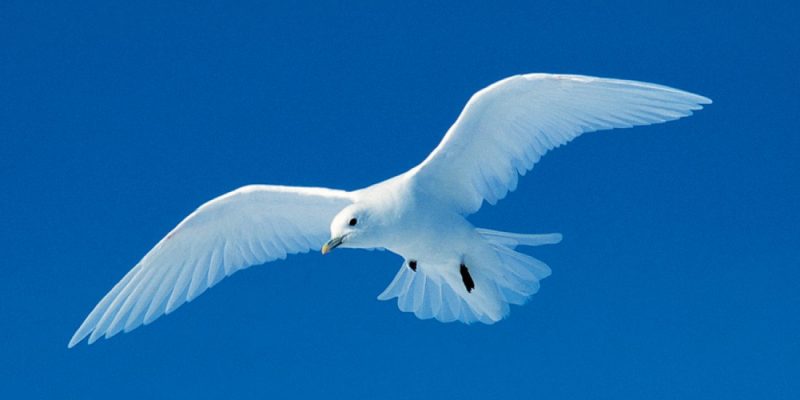
The Ivory Gull is a rare and beautiful bird that perfectly blends with the snowy Arctic landscape. Its all-white feathers make it difficult to spot against ice and snow. This gull has a unique ecological role, feeding on carrion from polar bears’ kills and waste from marine mammals. Of all the Arctic Birds, the Ivory Gull is perhaps the most mysterious and least understood due to its remote habitat.
Lapland Longspur – The Arctic Songbird
Despite the harsh conditions, the Lapland Longspur brings a melodic charm to the tundra with its sweet and bubbly song. This small songbird sports bold patterns of black, chestnut, and white during breeding season. It nests on the ground in open tundra, proving that even the smallest Arctic Birds can thrive where life is tough. Its seasonal plumage changes reflect the transformation of the Arctic landscape.
Northern Fulmar – The Tube-Nosed Nomad
Often mistaken for a gull, the Northern Fulmar is actually a member of the petrel family and shares evolutionary ties with albatrosses. These Arctic Birds have a distinctive tube-like structure on their beaks, which helps them excrete excess salt from seawater. They’re superb gliders, riding ocean winds with ease. Their oil-rich stomach contents are used defensively against predators—truly an unusual adaptation.
Thick-Billed Murre – The Arctic Penguin Lookalike
Though it may resemble a penguin, the Thick-Billed Murre is a true seabird and an adept flyer. It breeds in massive colonies on steep cliffs, where it lays single eggs on bare rock ledges. Murres are expert divers, plunging to depths of over 100 meters to hunt fish. Their striking black-and-white appearance and cliff-dwelling behavior make them stand out among Arctic Birds.
Red Phalarope – The Spinning Dancer
The Red Phalarope displays unique behavior during feeding—spinning in tight circles on the water to stir up small prey. This behavior is as fascinating as its role reversal in breeding: females are the more brightly colored and pursue males, who then incubate the eggs. These small shorebirds migrate across oceans, showcasing the adaptability and resilience of Arctic Birds on a global scale.
Ross’s Gull – The Elusive Beauty
Among the rarest Arctic Birds, Ross’s Gull is an ethereal presence with soft pink underparts and elegant wing patterns. Sightings are treasured by birdwatchers, as this gull breeds in remote parts of Siberia and migrates far out to sea. Its graceful flight and delicate appearance make it a symbol of Arctic mystery. Its presence in the region is a reminder of how much is still unknown about the far north’s wildlife.
Conclusion
From fierce hunters like the Gyrfalcon to delicate gliders like Ross’s Gull, Arctic Birds demonstrate incredible diversity and resilience. Their ability to adapt to extreme conditions—from freezing winds to scarce food—is nothing short of awe-inspiring. These ten birds not only survive but truly thrive in one of the harshest places on Earth. So next time you think of the Arctic as a frozen wasteland, remember it’s also a haven for some of nature’s most fascinating flyers. The world of Arctic Birds continues to inspire, surprise, and enchant those who take a closer look.
FAQs
Q1. What makes birds in the Arctic different from those in other regions?
Birds in the Arctic are uniquely adapted to extreme environments. They have specialized feathers for insulation, seasonal migrations, and behaviors suited to surviving harsh weather and limited food.
Q2. Do any bird species stay in the Arctic all year long?
Yes, a few species like the Snowy Owl and Gyrfalcon remain in the Arctic year-round. They are equipped to handle sub-zero temperatures and hunt even in the dark winters.
Q3. Are any of these birds considered threatened or endangered?
Some species face threats due to climate change, melting ice, and human activity. Conservation programs are ongoing to protect their habitats and monitor population health.
Q4. Where are the best places to see these birds in their natural habitat?
The best places include northern Canada, Alaska, Greenland, Iceland, and parts of Scandinavia. Expeditions and ecotours often provide excellent birdwatching opportunities.
Q5. What kinds of food do these birds typically eat?
Their diets range from fish, crustaceans, and insects to small mammals and carrion. Many are skilled hunters or divers, while others scavenge or migrate to follow food sources.
Also read: Cape Horner: 10 Stunning Destinations Every Traveler Must Experience